
Abstract
With the end of Dennard scaling and the slowing of Moore’s law, improvements in general purpose computing have plateaued. In response, new paradigms are emerging at the frontiers of the computing spectrum, driving new opportunities for technological and societal advancement. At the low-power frontier, edge AI hardware enables ubiquitous, privacy-preserving intelligence with low latency and scalability. At the high-performance frontier, quantum computing is gaining practicality, offering solutions to previously intractable problems in physical sciences, biology, and optimization. Despite their differences, both domains share a common, critical challenge: the need for integrated circuits (ICs) that are simultaneously energy-efficient and compact. Edge nodes must operate under tight energy and form-factor constraints, while quantum-classical interfaces must meet stringent thermal and spatial limits at cryogenic temperatures.
In this talk, Zhang will present cross-stack designs of low-power ICs that address these challenges at both frontiers of the computing spectrum. The first thrust focuses on a series of energy-efficient edge AI processors that co-optimize algorithm, architecture, circuit, and technology. The second highlights scalable cryogenic CMOS co-processing hardware for fault-tolerant quantum computing (FTQC), with emphasis on quantum error correction decoding and qubit readout. Zhang will conclude with his vision for advancing both thrusts through a unified methodology grounded in the emerging paradigm of physical AI, and how AI-driven design automation can accelerate progress in both classical and quantum domains.
Bio
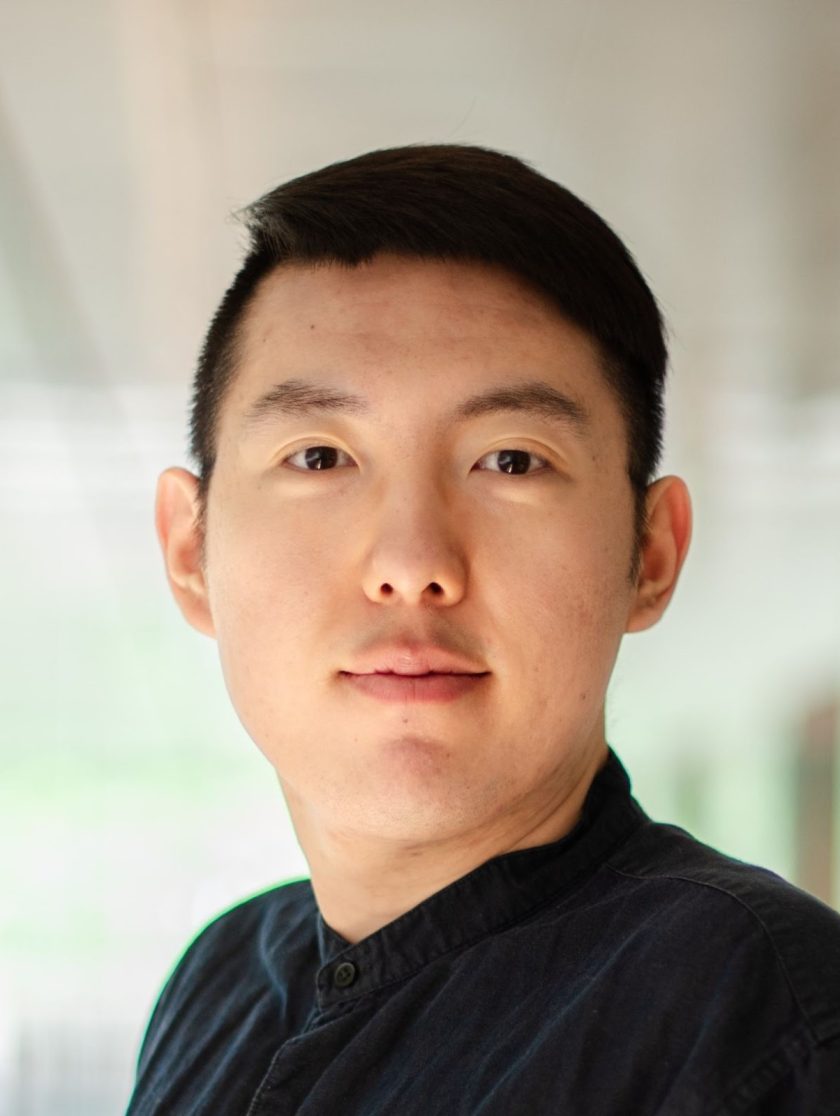
Qirui Zhang is a Research Investigator in the Department of Electrical and Computer Engineering at the University of Michigan, Ann Arbor, where he received his doctoral degree in 2024, advised by Professor Dennis Sylvester. His research focuses on the cross-stack co-design of resource-efficient integrated circuits and systems with algorithm, architecture, and technology layers, targeting emerging computing paradigms such as edge AI and quantum computing. He is also broadly interested in computer-aided design for integrated circuits and quantum computers.
Zhang’s research has been recognized with several honors, including the Best Paper Award at the 2022 tinyML Research Symposium, Best Paper Award at IEEE ASAP 2023, Best Student Paper Award (1st Place) at IEEE ESSERC 2024, and a Best Student Paper Nomination at the 2025 Symposium on VLSI Technology and Circuits. He was also a finalist of the 2023 Qualcomm Innovation Fellowship (North America). He serves as a reviewer for the IEEE Journal of Solid-State Circuits and the IEEE Transactions on Circuits and Systems I. He received his bachelor’s degree in Microelectronics Science and Engineering from Shanghai Jiao Tong University in 2018.