

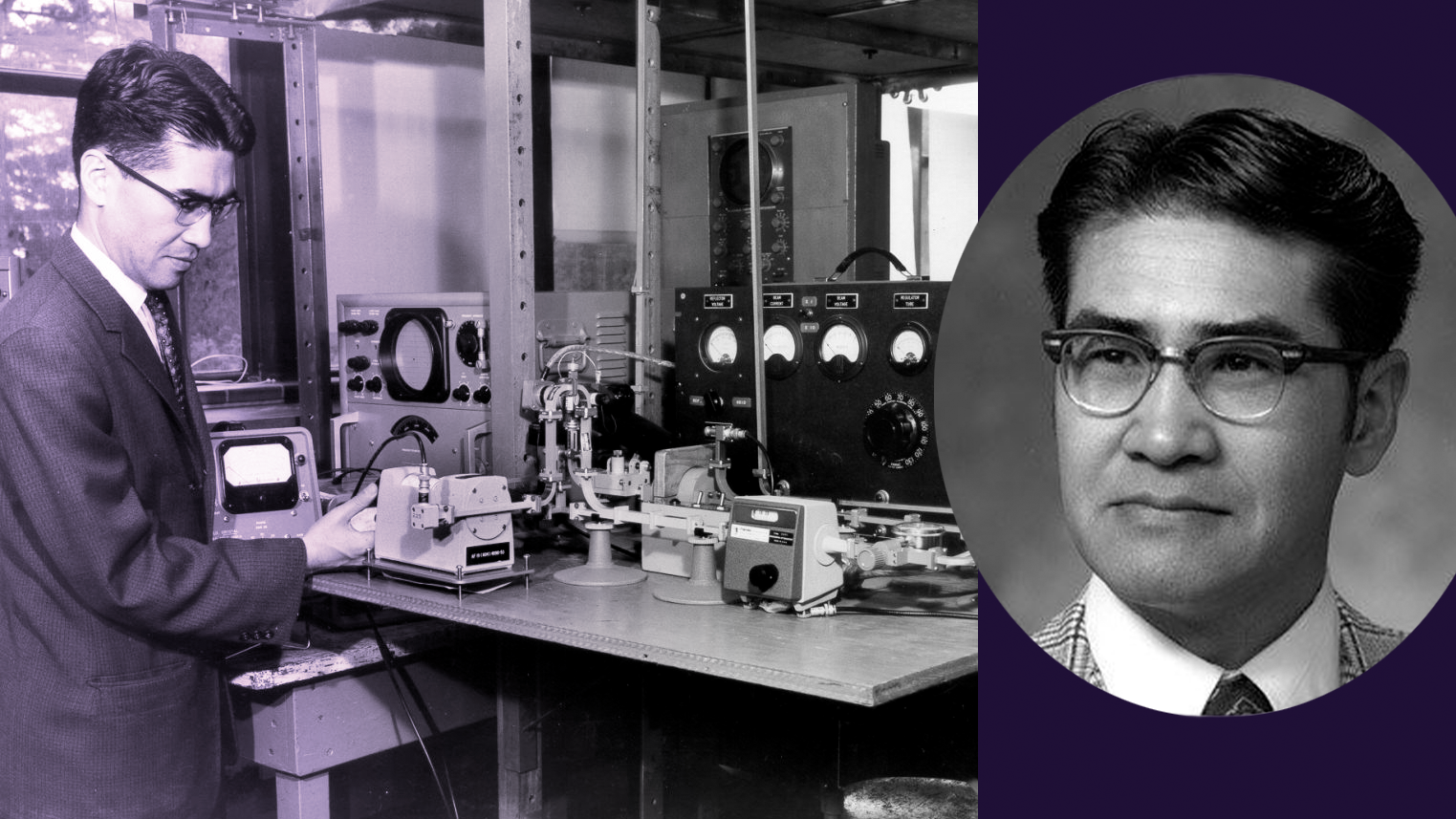
Article by Wayne Gillam / Graphic layout by Ryan Hoover / UW ECE News
If you have ever been in a plane that landed safely in a low-visibility thunderstorm or thick, heavy fog, you can thank UW ECE Professor Emeritus Akira Ishimaru. As one of the world’s top experts in electromagnetic wave propagation and scattering in random and turbulent media, his research has affected every aspect of modern life. Significant advancements in radar systems, microwave remote sensing, satellite and cellular communications, optical communications, astronomy, ultrasound imaging, and laser surgery were all made possible by his work.
Ishimaru retired from UW ECE as a professor emeritus in 1998, but he remained active as a researcher and educator until the end of his life. He passed away on November 10, 2025, at the age of 97. He was well-respected among his students, peers, and colleagues, and according to those who knew him well, he had an endless passion for his work. Ishimaru’s achievements are too numerous to list them all here. But illustrated below are key milestones from his life that reflect significant contributions he made to the field of electrical and computer engineering.
An outstanding researcher and educator
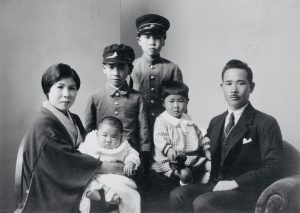 Ishimaru was born March 16, 1928, in Fukuoka, a city on the northern shore of Kyushu Island, Japan. At an early age, he showed an interest in and an aptitude for mathematics and physics. He attended the University of Tokyo, where in 1951, he earned his bachelor’s degree in electrical engineering. That same year, he was awarded a prestigious Fulbright Scholarship and was accepted into the UW ECE (then UW EE) doctoral program.
“As a child, I was very much interested in science fiction, which appeared regularly in children’s magazines. There were always heroes who ran into great trouble, and then a scientist-engineer would come up with a great idea and a new device to save the good people from the bad ones. I made model airplanes run by rubber bands, and gliders. In those days, we had to start from scratch.”1
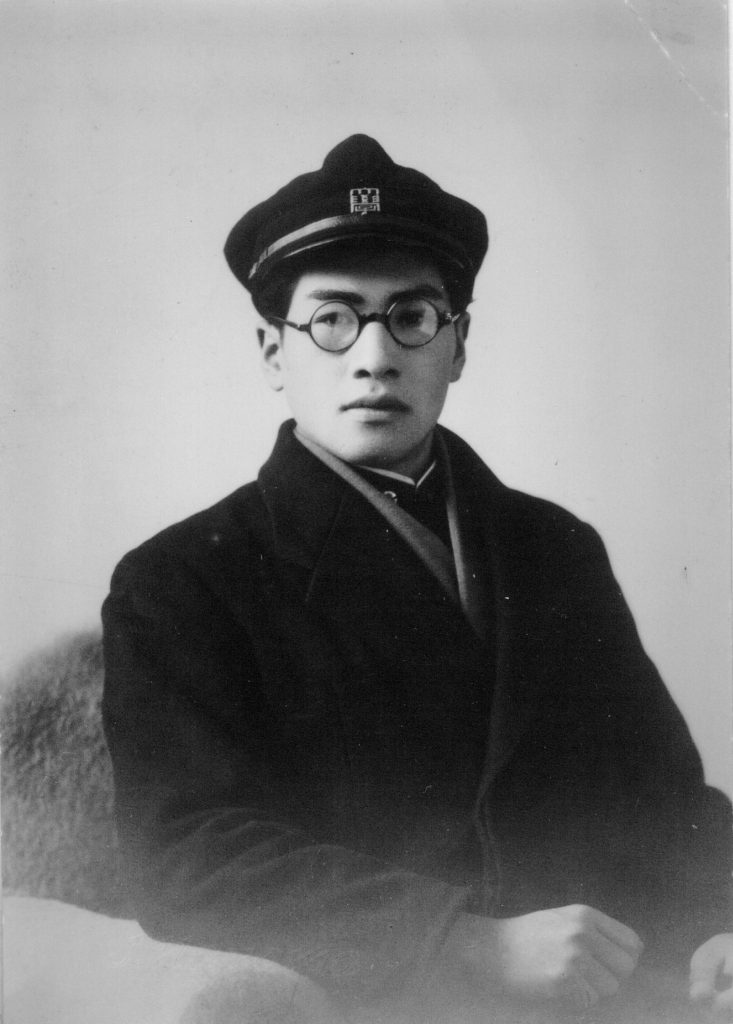
“In my middle school days, I liked algebra, geometry, physics, and English. We used a textbook patterned after old Euclid geometry, which I liked very much. It was just so beautiful to start with a few axioms and definitions and construct a whole body of geometry by logical argument.” 1
“I chose to study electrical engineering because mathematics and physics were very interesting to me, but I thought that electrical engineering had more applications and was even more interesting.” 2
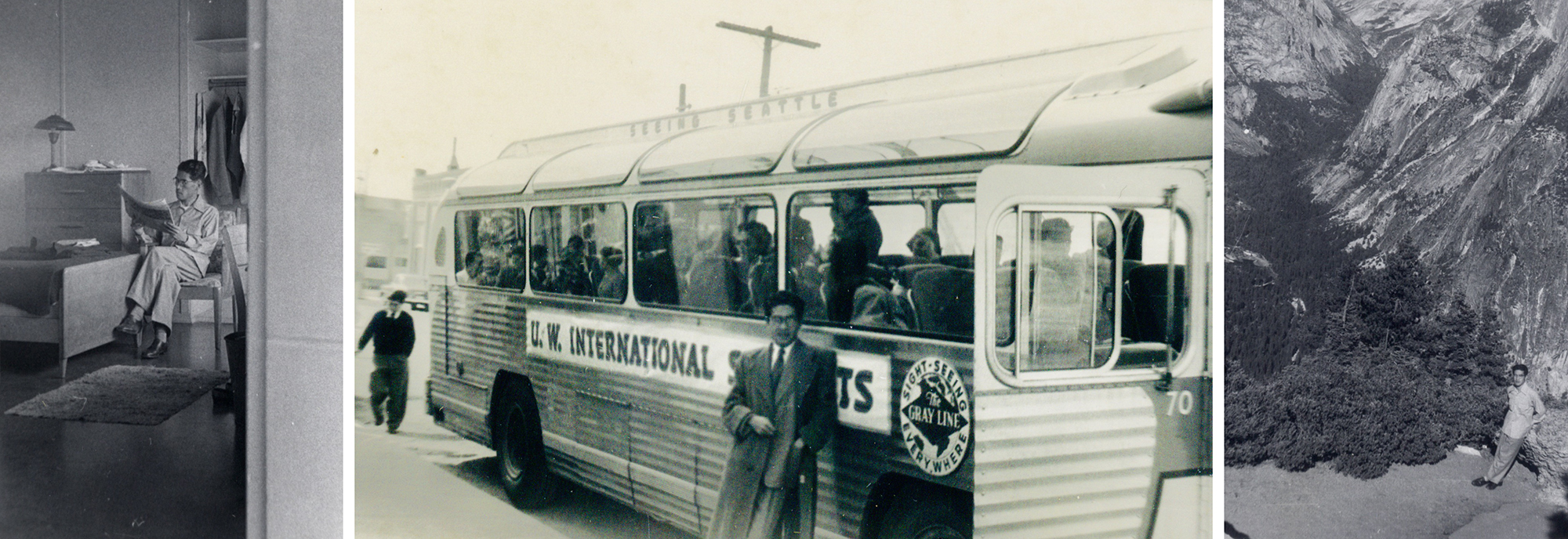
He was the first student to receive a doctoral degree from UW ECE. After receiving his bachelor’s degree, he worked at the Electrotechnical Laboratory in Tanashi, Tokyo, for several months before traveling to the United States in 1952 to join the brand-new UW EE doctoral program. He excelled at his studies, and in 1956, he worked for the summer as a technical staff member in the Bell Telephone Laboratory in Holmdel, New Jersey. In 1958, Ishimaru became the first student from the UW to earn a doctoral degree in electrical engineering.
“At that time, the United States was the top place to be, as far as science goes. All the interesting progress was in the United States, and so, it was very exciting.” 2
Ishimaru spent almost his entire career at UW ECE while being an active participant and leader in the engineering community worldwide. After receiving his doctoral degree, he was immediately hired by the Department as an assistant professor. In 1961, he was promoted to an associate professor, and he was a visiting associate professor at the University of California, Berkeley, from 1963 to 1964. In 1965, he became a full professor at UW ECE. In 1977, he accepted a joint appointment with the department of applied mathematics. In 1990, he received the Faculty Achievement Award for Outstanding Research from the UW College of Engineering, and in 1993, he was appointed Boeing Martin Professor. In 2011, the College bestowed its highest honor on Ishimaru — The Diamond Award for Distinguished Achievement in Academia.
In 1973, Ishimaru became a Fellow of the Institute of Electrical and Electronics Engineers, or IEEE, an organization in which he was active and received many awards throughout his professional life. He also was heavily involved in the International Union of Radio Science (Union Radio-Scientifique Internationale), known as URSI. In 2020, he was inducted as an URSI Lifetime Fellow.
“URSI and IEEE are both very important to me. In fact, I spent a good part of my life working with those two organizations.” 2
He was a prolific writer, publishing three books, more than 190 journal papers, and over 250 conference papers throughout his career. Ishimaru also was editor of the journal Radio Science from 1979 to 1983 as well as the founding editor of the journal Waves in Random Media (Institute of Physics, U.K.) and Waves in Random and Complex Media (Taylor and Francis, U.K.). He is perhaps best known for his two-volume textbook, “Wave Propagation and Scattering in Random Media.” This groundbreaking work marked a watershed moment as it was the first comprehensive text in the field to establish fundamental theoretical frameworks, bridge theory with practical applications, and unify diverse disciplinary approaches. It was published in 1978, translated into Russian in 1981, Chinese in 1986, reissued in 1997, and it came out in paperback in 2013.
“This book summarized many things I was studying. It contains a more analytical approach, but it also includes some experiments. To me, an analytical and an experimental approach are both important.”2
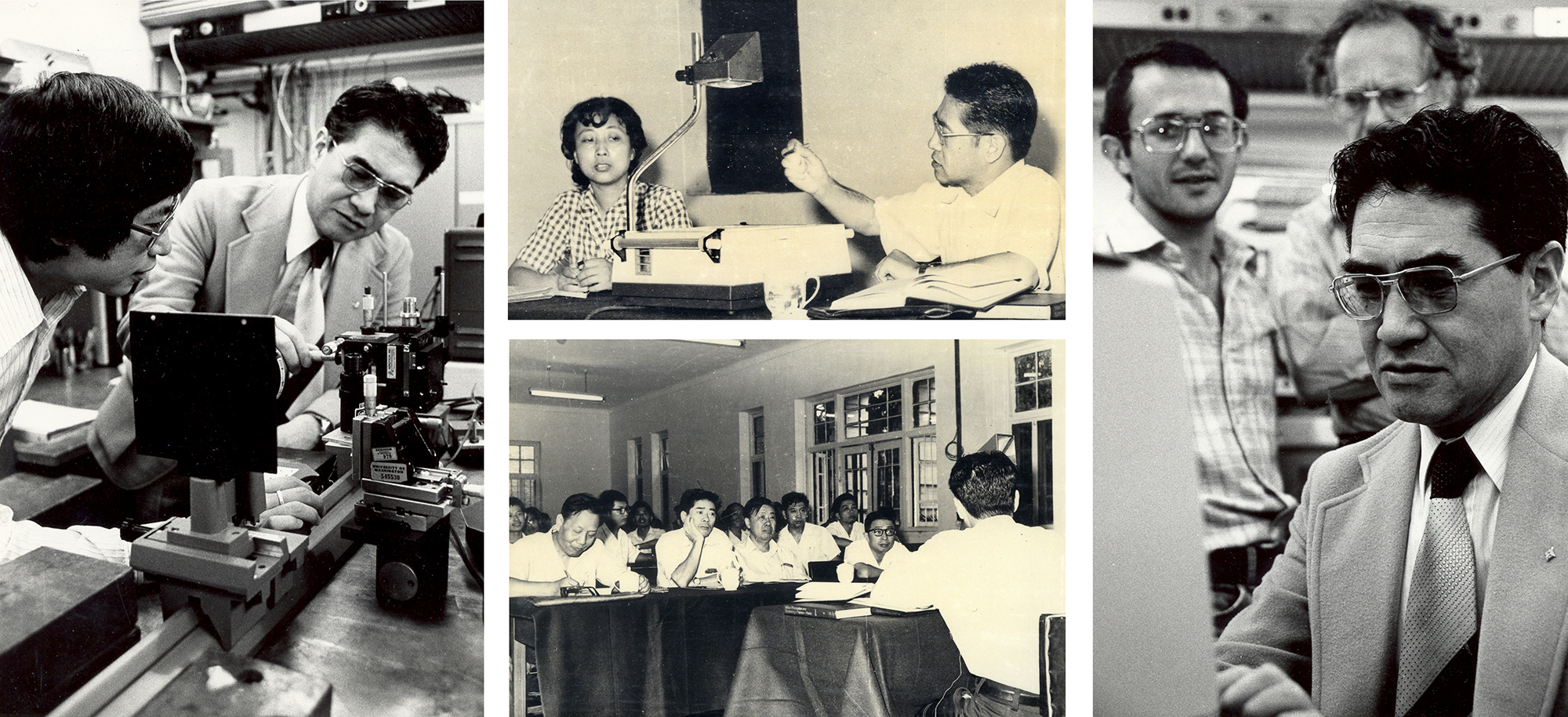
Ishimaru received many awards for his work as a researcher and educator, including some of the highest honors in engineering. In 1996, he was elected to the National Academy of Engineering. He is one of only five faculty from UW ECE to ever receive this honor. In addition to being an IEEE Fellow and an URSI Lifetime Fellow, he was a fellow of the Optical Society of America (now Optica), the Acoustical Society of America, and the Institute of Physics. He received the IEEE Centennial Medal in 1984, and Distinguished Achievement Awards from the IEEE Antennas and Propagation Society in 1995 and the IEEE Geoscience and Remote Sensing Society in 1999. That year, he also received the IEEE Heinrich Hertz Medal for fundamental contributions to the study of electromagnetic waves and the URSI John Howard Dellinger Gold Medal for outstanding achievements in radio science. In 2000, he received the IEEE Third Millenium Medal, and in 2008, he was elected to the Washington State Academy of Science. In 2025, he was selected as one of the “Legends of Electromagnetics” by the IEEE Antennas and Propagation Society.
“This is a great honor for me, and I am grateful to the Electrical Engineering Department, the College of Engineering, and the University of Washington for providing me with an environment where I could contribute to the engineering profession.” — Professor Emeritus Akira Ishimaru, in his 1996 acceptance speech to the National Academy of Engineering
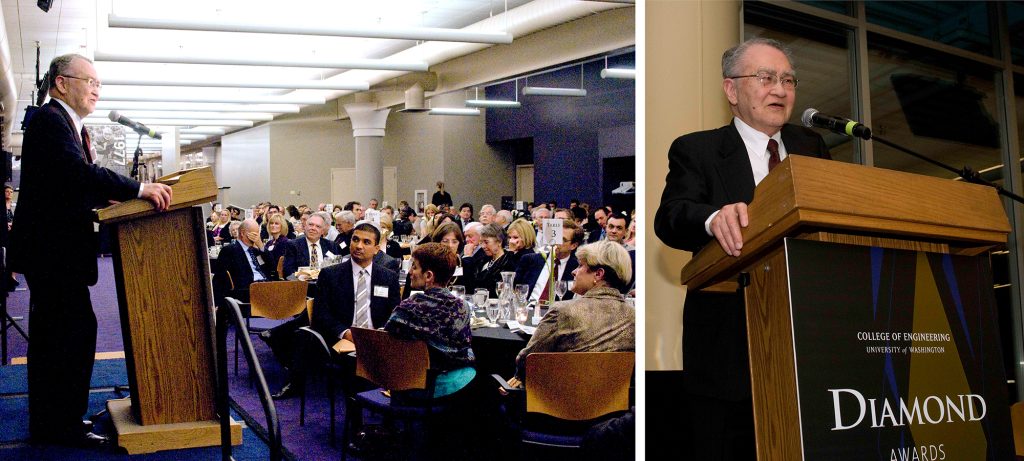
Ishimaru retired from UW ECE as a professor emeritus, but he remained professionally active for many years afterwards. Over his long academic career, Ishimaru advised more than 40 doctoral students and supervised numerous graduate students across the electrical engineering and applied mathematics departments. And more than ten years after retiring, he had active research grants and continued to graduate one or two doctoral students per year.
His dedication was phenomenal. After he completed writing his third book at the age of 88, he turned his attention to current research in his field and developing a set of topics he could recommend to researchers for further study. In his early 90s, he gave keynote speeches and presentations on his recommendations. At the age of 93, he decided to study theoretical physics, aiming to combine those theories with his engineering experience and develop new practical applications that had not been considered before. His last project, started at the age of 97, but unfinished because of his passing, was a talk scheduled to be presented virtually at the 2026 National Radio Science Meeting. This presentation was intended to cover his views about the potential for new applications to be derived from concepts originally developed in theoretical physics by viewing those theories from a classical electromagnetics perspective.
On his 88th birthday, which is considered to be a significant birthday milestone in Japan, Ishimaru wrote these words:
“As I look back over 88 years of my life, I cannot help feeling thankful for how blessed my life has been. I officially retired in 1998 from the University of Washington after 40 years of teaching and research. However, I still go into the office and enjoy what I like most: research and talking with graduate students. I enjoy presenting my research at scientific meetings and writing papers. I serve on several committees of scientific organizations and serve as an editor of journals. I’ve had a wonderful life in retirement, and I often feel that now may be one of the best times of my life.” 1
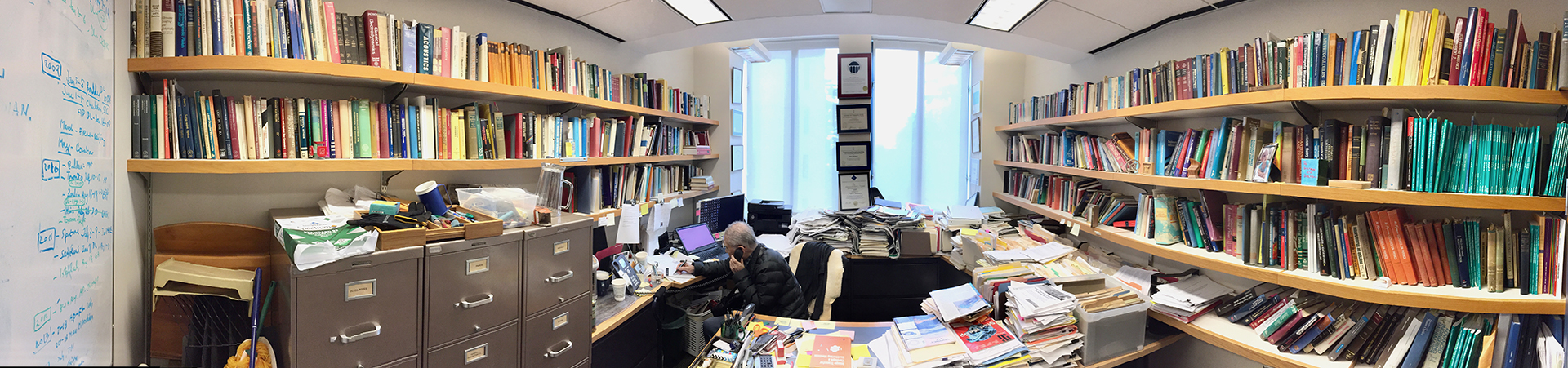
Altogether, Ishimaru spent 73 years at UW ECE focused on learning — as a student, researcher, professor, and mentor. His talent and hard work led to important contributions in the study of electromagnetic wave propagation, launched the careers of many of his students, and laid a foundation for the advanced technologies we rely on today.
According to his son, John Ishimaru, his father’s incredible work ethic and dedication to his field stemmed from a deep curiosity that went well beyond the borders of engineering. He said that his father always encouraged people to go beyond comfortable boundaries, to not be afraid to explore new areas, and to be lifelong learners.
“My father’s sense of curiosity about the world, combined with an open-minded, unbiased approach toward learning, was part of what made him an open and understanding person in general,” John Ishimaru said. “Those qualities, combined with his kindness and caring and his principled beliefs, made him, along with my mother, the foundation of our family. His approach to living inspired us, and we are going to miss him every day.”
According to John Ishimaru, there were two small notes pasted on his father’s office door that were emblematic of his father’s life and legacy. They read:
“A room without books is like a body without a soul.” 1
“‘What is as important as knowledge?’ asked the mind. ‘Caring and seeing with the heart,’ answered the soul.” 1
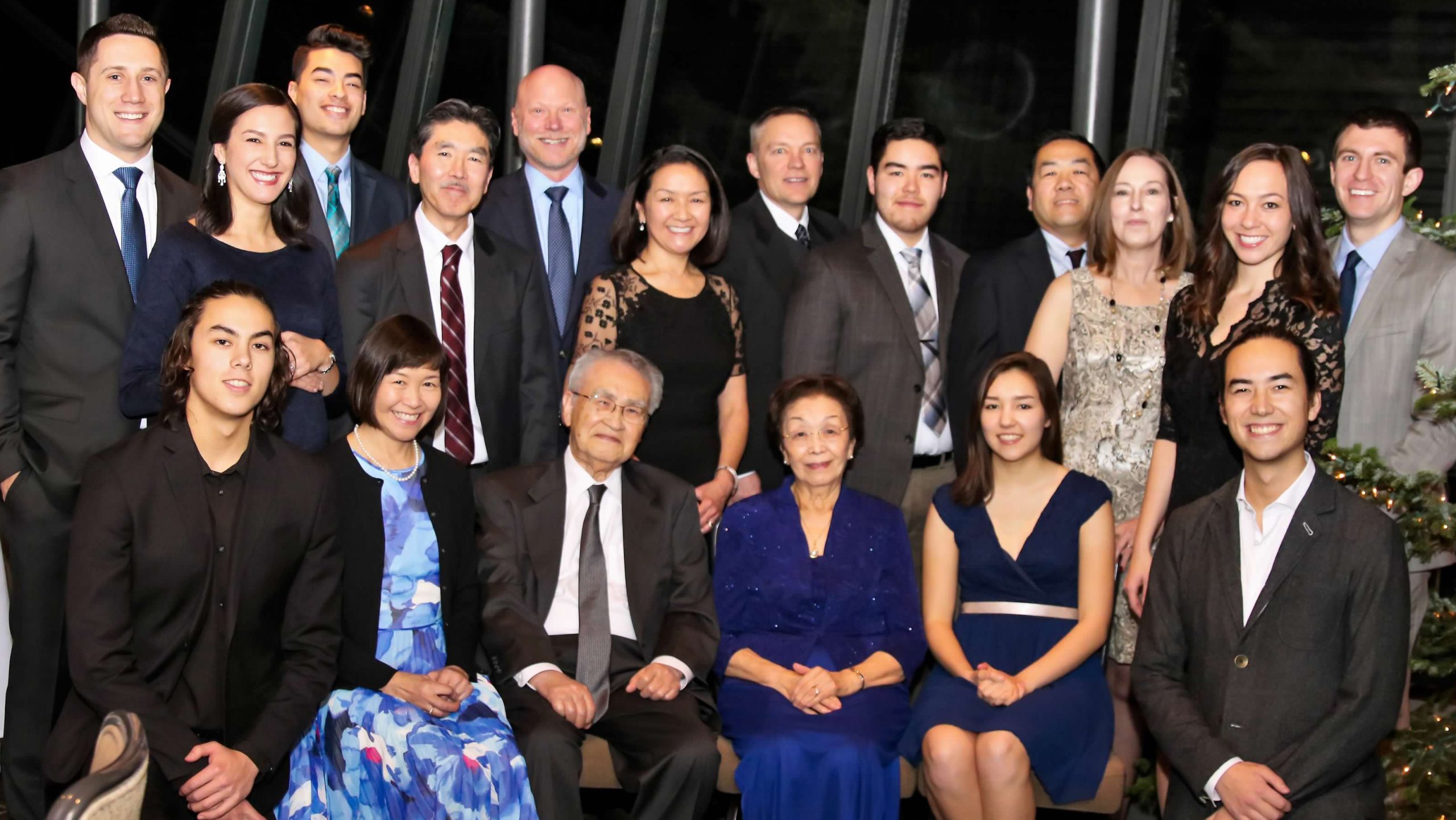
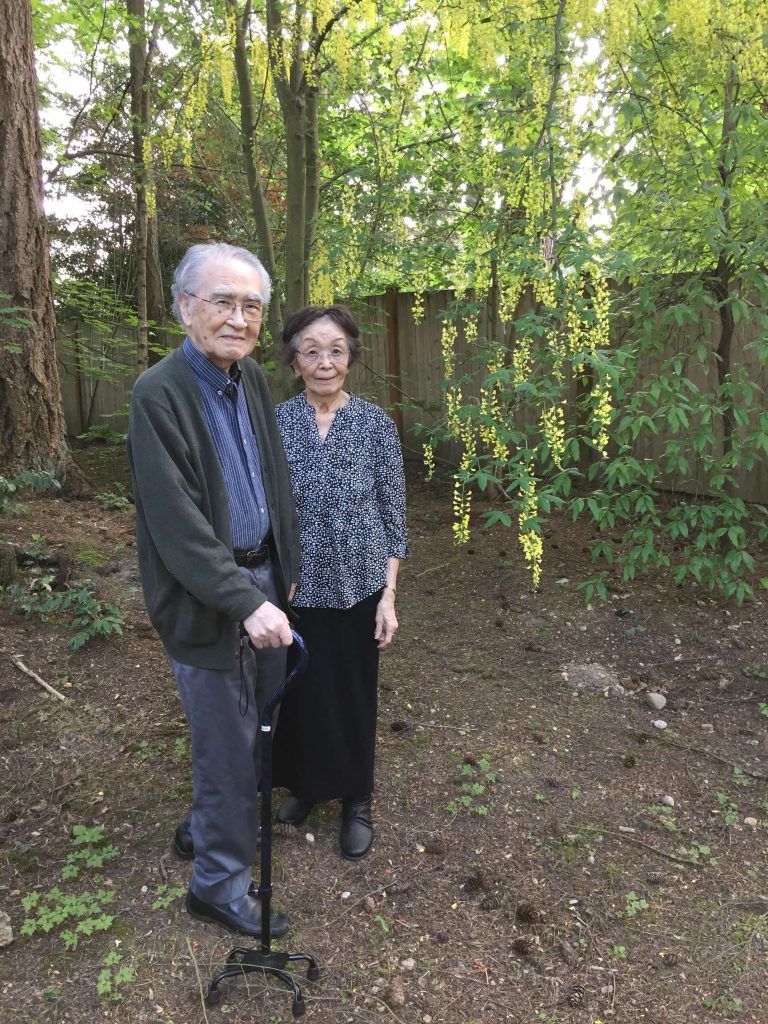
A memorial service was held for Ishimaru on Saturday, November 29, 2025, in Bellevue, Washington. He is survived by his beloved wife of 69 years, Yuko; their four children John Ishimaru, Jane Riley (Chuck), Jim Ishimaru (Karen), and Joyce Walborn (Gene); his seven grandchildren Katie von Geldern (Will), Patricia Hurst (Chad), Andrew Ishimaru (Kirie), Eric Ishimaru (Anne Marie), Aaron Ishimaru, Ben Walborn (Natalie), and Emily Walborn; and his five great-grandchildren Grace Hurst, Olivia Hurst, Theo von Geldern, Niko von Geldern, and Maxwell Salazar-Walborn. He also leaves behind his younger brother Tohru and many other relatives in Japan.
 If you would like to make a gift to UW ECE in memory of Professor Emeritus Akira Ishimaru, his family suggests donating to the Chair’s Fund for Excellence in Electrical & Computer Engineering. This fund supports Department programs and activities, including student activities for which state funds are not available. For more information, or to make a special donation, contact Sue Brennan in University Advancement.
__________________________________________________________________________
Photos were provided by the Ishimaru family, the University of Washington, and IEEE. Quotes from UW ECE Professor Emeritus Akira Ishimaru were lightly edited for this article. These quotes were provided by the Ishimaru family 1 and sourced from a 2025 IEEE Antennas and Propagation Society Legends of Electromagnetics interview.2